F-Secure Anti-Theft For Mobile
Thursday, 23 June 2011 03:05
A lost or stolen cell phone can be devastating, considering that the phone may contain private data and information that may even be used for identity theft or other criminal activities.
F-Secure Anti-Theft For Mobile is a free security software for cell phones running Symbian OS, Windows Mobile or Android. It offers several options to take control of the situation.
The key features of Anti-Theft for Mobile are the ability to remotely lock the cell phone, locate it and to wipe its data in case it looks like the phone is lost forever.
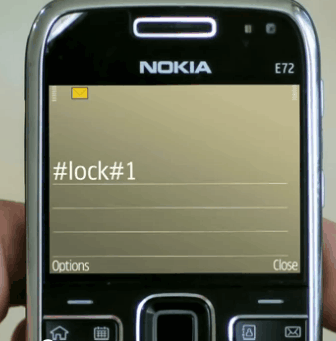
The software reacts on remote commands send via SMS to the phone. Here are the available commands and their action:
- Send #lock#YourCode to the stolen or lost phone. Will lock the phone, only option to unlock it is to enter the correct password.
- Send #locate#YourCode to the phone. Locates the phone and displays a link to Google Maps that can be used to find out where the phone is located.
- Send #wipe#YourCode to the phone to delete all confidential data on the phone.

Windows 8: Microsoft's Radical Move
Wednesday, 15 June 2011 05:28
Microsoft decided to whip back the curtain on Windows 8, with demonstrations at the 2011 Computex conference in Taiwan and D:All Things Digital Conference in Rancho Palos Verdes, Calif.
If things stay on course through the final release, Microsoft's next-generation operating system will represent something of a sea change from previous versions of Windows. At least in the tablet version demonstrated at both conferences, Windows 8's user interface relies on large, colorful tiles that display active information and open applications at a finger-touch. ("Windows 8," by the way, is apparently Microsoft's internal codename for the OS, and not necessarily the moniker for the final version.)
Windows 8 features multitasking, including the ability to display two apps side-by-side on the screen. Users can "snap" applications to one side of the screen, a feature heavily reminiscent of the "Aero Snap" present in Windows Vista and Windows 7. A swipe of the finger will cycle through apps. There's a virtual keyboard, adjustable Interface aside, Windows 8 will apparently support the full version of legacy applications such as Office.
"This represents a fundamental shift in Windows design that we haven't attempted since the days of Windows 95, presenting huge opportunities for our hardware partners to innovate with new PC designs," Mike Angiulo, corporate vice president of Windows Planning, Hardware and PC Ecosystem, reportedly told the audience at the Computex conference.
Windows 8 on a tablet certainly looks pretty. The question is whether that streamlined, sleek interface can support the heavy-duty needs of hardcore PC users, who are used to the old Windows interface that allows for multiple open windows and documents and applications. Microsoft has shown how Windows 8 can play, particularly on a tablet; the question now is how Windows 8 can improve people's daily workflow--not to mention, how seamlessly it can reconcile this new interface and apps with the legacy baggage that so many users and developers bring to the proverbial table.
[source: Microsoft Watch ]
If things stay on course through the final release, Microsoft's next-generation operating system will represent something of a sea change from previous versions of Windows. At least in the tablet version demonstrated at both conferences, Windows 8's user interface relies on large, colorful tiles that display active information and open applications at a finger-touch. ("Windows 8," by the way, is apparently Microsoft's internal codename for the OS, and not necessarily the moniker for the final version.)
Windows 8 features multitasking, including the ability to display two apps side-by-side on the screen. Users can "snap" applications to one side of the screen, a feature heavily reminiscent of the "Aero Snap" present in Windows Vista and Windows 7. A swipe of the finger will cycle through apps. There's a virtual keyboard, adjustable Interface aside, Windows 8 will apparently support the full version of legacy applications such as Office.
"This represents a fundamental shift in Windows design that we haven't attempted since the days of Windows 95, presenting huge opportunities for our hardware partners to innovate with new PC designs," Mike Angiulo, corporate vice president of Windows Planning, Hardware and PC Ecosystem, reportedly told the audience at the Computex conference.
Windows 8 on a tablet certainly looks pretty. The question is whether that streamlined, sleek interface can support the heavy-duty needs of hardcore PC users, who are used to the old Windows interface that allows for multiple open windows and documents and applications. Microsoft has shown how Windows 8 can play, particularly on a tablet; the question now is how Windows 8 can improve people's daily workflow--not to mention, how seamlessly it can reconcile this new interface and apps with the legacy baggage that so many users and developers bring to the proverbial table.
[source: Microsoft Watch ]
Intel Core 2 Duo E6700 Review
Saturday, 7 May 2011 22:47

The good: Most cost-efficient chip on the market; low power consumption makes it cooler, quieter, and easy to use in smaller PC designs.
The bad: Chipset politics between Intel and graphics card vendors hurt gamers, who now have to pick an Intel board for ATI's CrossFire or an Nvidia board for SLI cards.
The bottom line: Intel's Core 2 Duo E6700 offers the best price-to-performance ratio we've seen in a desktop chip. For half the cost of AMD's top-of-the-line chip, you get identical if not superior performance and better power efficiency. AMD surprised us last year with its completely dominant dual-core chips, but Intel regains the crown with Core 2 Duo.
Review: AMD, you've had a good run.
Intel announced its line of Core 2 Duo desktop CPUs today. If you're buying a new computer or building one of your own, you would be wise to see that it has one of Intel's new dual-core chips in it. The Core 2 Duo chips are not only the fastest desktop chips on the market, but also the most cost effective and among the most power efficient. About the only people these new chips aren't good for are the folks at AMD, who can claim the desktop CPU crown no
... Expand full review
AMD, you've had a good run.
Intel announced its line of Core 2 Duo desktop CPUs today. If you're buying a new computer or building one of your own, you would be wise to see that it has one of Intel's new dual-core chips in it. The Core 2 Duo chips are not only the fastest desktop chips on the market, but also the most cost effective and among the most power efficient. About the only people these new chips aren't good for are the folks at AMD, who can claim the desktop CPU crown no longer.
We've given the full review treatment to two of the five Core 2 Duo chips. You can read about the flagship $999 Core 2 Extreme X6800 here and the entire Core 2 Duo series here. In this review, we examine the next chip down, the $530 2.67GHz Core 2 Duo E6700. While the Extreme X6800 chip might be the fastest in the new lineup, we find the E6700 the most compelling for its price-performance ratio. For just about half the cost of AMD's flagship, the $1,031 Athlon 64 FX-62, the Core 2 Duo E6700 gives you nearly identical, if not faster performance, depending on the application.
As we outlined in a blog post a month ago, the Core 2 Duo represents a new era for Intel. It's the first desktop chip family that doesn't use the NetBurst architecture, which has been the template for every design since the Pentium 4. Instead, the Core 2 Duo uses what's called the Core architecture (not to be confused with Intel's Core Duo and Core Solo laptop chips, released this past January). The advances in the Core architecture explain why even though the Core 2 Duo chips have lower clock speeds, they're faster than the older dual-core Pentium D 900 series chips. The Core 2 Extreme X6800 chip, the Core 2 Duo E6700, and the $316 Core 2 E6600 represent the top tier of Intel's new line, and in addition to the broader Core architecture similarities, they all have 4MB of unified L2 cache. The lower end of the Core 2 Duo line, composed of the $224 E6400 and the $183 E6300, have a 2MB unified L2 cache.
We won't belabor each point here, since the blog post already spells them out, but the key is that it's not simply one feature that gives the Core 2 Duo chips their strength, but rather it's a host of design improvements across the chip and the way it transports data that improves performance. And out test results bear this out.
On our gaming, Microsoft Office, and Adobe Photoshop tests, the E6700 was second only to the Extreme X6800 chip. Compared to the 2.6GHz Athlon 64 FX-62, the E6700 was a full 60 frames per second faster on Half-Life 2, it finished our Microsoft Office test 20 seconds ahead, and it won on the Photoshop test by 39 seconds. On our iTunes and multitasking tests, the E6700 trailed the FX-62 by only 2 and 3 seconds, respectively. In other words, with the Core 2 Duo E6700 in your system, you'll play games more smoothly, get work done faster, and in general enjoy a better computing experience than with the best from AMD--and for less dough.
MWC 2011: LG overview
22:41
Press conference
The LG press conference at the start of MWC 2011 saw the official announcement of the Optimus 3D and Optimus Black smartphones and the 8.9" tablet Optimus Tab.

MWC booth
Of course we also stopped by the LG booth at the MWC itself, where we could spend some more quality time with the new devices.


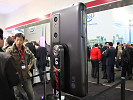
As you can see from the photos the new announcements generated quite a lot of interest. Still we managed to fight our way through the crowd and got our geeky hands on all of them.
Understandably, we started with the Optimus 3D. Join us after the break for a load of live images, a hands-on video and a real 3D video captured with its cameras. Plus we've got its impressive Quadrant benchmark performance.
Samsung Galaxy S II vs LG Optimus 2X
22:39
Introduction
Ah, the power of dual-core processors – it lets you do cool stuff like buttery-smooth multitasking, exciting 3D portable gaming or Full HD videos. The latest Samsung I9100 Galaxy S II packs the new Exynos chipset, which pairs a couple of Cortex-A9 cores with a Mali-400MP GPU. Sounds like a potent mix – at least on paper, so we’re eager to pit it against one of the first phones to offer Nvidia’s Tegra 2 platform - the LG Optimus 2X.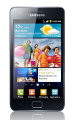
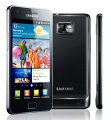



What we have in our hands is a pre-release test unit of the Galaxy S II, successor to one of the best selling Android phones. Ours runs its two CPU cores at 1GHz but Samsung announced that the speed will be bumped up to 1.2GHz.
Once that’s done, the I9100 Galaxy S II would be the most powerful droid – until the competition catches up, which won’t take long judging by our rumor mill. Anyway, we’re going to use the chance to put Samsung’s Exynos chipset head to head with NVIDIA’s Tegra 2. We’ll be using the LG Optimus 2X for the benchmarks, which runs at the same clock speed as our Galaxy S II – 1GHz.
We’re already working on our Galaxy S II preview but until that’s done, we just couldn’t resist testing some of the most interesting new features of Samsung’s latest flagship. Here’s what this comparison will be about.
First off, this is our first encounter with the Super AMOLED Plus technology, which improves on an already excellent screen. We’ll run the new display through several tests to determine how it stacks up against the old one and other leading displays on the market.
Next, we’ll get to the camera department – the Galaxy S II comes with an 8MP still shooter that can capture 1080p FullHD videos. That’s our second encounter with such a beast and we’ll be pitting it against the LG Optimus 2X camera, that’s for sure. A surprising guest star in the camera test is the Sony Ericsson Arc, which we recently reviewed as well.
After that comes the test of what makes the Samsung I9100 Galaxy S II tick – the new dual-core Exynos chipset. Just keep in mind the Galaxy S II retail version will have 20% more clock speed for each of the two CPU cores.
Finally, we’ll wrap things up with a real-life performance test – how does the Galaxy S II stack up in real world tasks (we’ll be testing the user interface, web browser and games) against a phone with a Tegra 2 chipset (which is quite popular among new smartphones and even tablets).
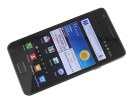
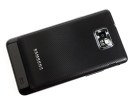
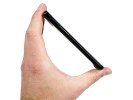
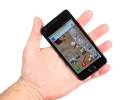
Ready? Then let’s jump to the next page – but be warned, you are in for some serious display envy.
Motorola Atrix 4G review: Enter the Atrix
22:35
Introduction
It was the alliance with Android that put Motorola out of the woods. Like every partnership, it’s been a series of peaks and dips but every now and then the relationship between Motorola and Android goes beyond a mere marriage of convenience and well into a simmering love affair.They did it with the MILESTONEs and the DROID X, the BACKFLIP and the DEFY. With the ATRIX 4G, Moto says it has no plans to live in the shadows of other big makers.
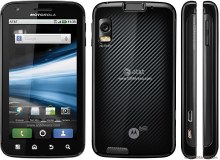
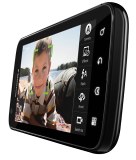
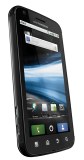
Motorola ATRIX 4G official photos
The Motorola ATRIX 4G is the first dual-core smartphone in the Motorola line-up. It’s also the first to flaunt a qHD touchscreen. That’s as solid as credentials get. Add the fact it’s the first handset for Motorola to support the fast HSDPA+ network (hence the 4G moniker) and you’ve got yourself a Droid that’s not afraid of what comes next.
Dual core is certainly the next big thing in mobile phones and the Motorola ATRIX deserves credit for being among the first – our bad really, this review isn’t exactly on time.
But there are other bold decisions that Motorola had to make. The HD and laptop docks for one – though the concept is not exactly original, Motorola is trying to make it mainstream. The added fingerprint scanner is not new either but well forgotten old does just as well. Plus, it will satisfy the privacy freak in all of us.
Anyway, the standard package is what we’re interested in and this is what our review will focus on. The optional extras can wait. The ATRIX is more important to us a phone (a dual-core smartphone, to be precise) than a wannabe laptop or a potential entertainment dock. Let’s waste no more time and take a glimpse of the ATRIX 4G’s key features.
Key features
- Quad-band GSM and dual-band 3G with HSDPA and HSUPA
- 4" 16M-color capacitive touchscreen of qHD (960 x 540 pixels) resolution, scratch-resistant Gorilla glass
- Dual-core 1GHz ARM Cortex-A9 proccessor, ULP GeForce GPU, Tegra 2 chipset; 1GB of RAM
- Android OS v2.2; MOTOBLUR UI (update to Gingerbread planned)
- Web browser with Adobe Flash 10.1 support
- 5 MP autofocus camera with dual-LED flash; face detection, geotagging
- 720p video recording @ 30fps (to be upgraded to 1080p Full-HD )
- Wi-Fi ab/g/n; Wi-Fi hotspot functionality; DLNA
- GPS with A-GPS; Digital compass
- Fingerprint scanner that doubles as a power key
- 16GB storage; expandable via a microSD slot
- Accelerometer and proximity sensor
- Standard 3.5 mm audio jack
- microUSB port (charging) and stereo Bluetooth v2.1 with A2DP
- standard microHDMI port
- Smart and voice dialing
- Office document editor
- Active noise cancellation with a dedicated secondary mic
- DivX/XviD video support
- Lapdock and HD Dock versatility
- Web browser with Adobe Flash 10.2 support
Main disadvantages
- Not the latest Android version
- No FM radio
- Screen image is pixelated upon closer inspection
- Questionable placement of the Power/Lock button
- Poor pinch zoom implementation in the gallery
- No dedicated shutter key
- Doesn’t operate without a SIM card inside
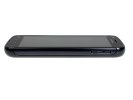
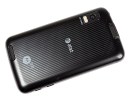
Motorola ATRIX 4G live photos
Garnish all this premium hardware with a 5MP camera with dual LED flash and a 4-inch capacitive touchscreen of qHD resolution of 540x960 pixels, and the ATRIX 4G is more than ready to play with the other dual-core kids.
As for us, we are about to take a closer look at the design and build of the phone and find out if it matches the premium hardware that resides within.
HTC Desire S review: Droid cravings
22:33
Introduction
Powerful hardware, large high-res screen and the latest Android version in a single piece of solid metal – the recipe did wonders for the original Desire so no wonder HTC are in no mood to experiment with the sequel. Take the best and make it better pretty much sums up the game plan. Oh well, we’ll take quietly brilliant even if emphasis is sometimes on quiet. In other words, the Desire S is a phone we’re ready to like. But make no mistake – it’s not meant to be the flagship its predecessor was.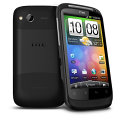
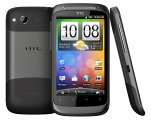
HTC Desire S official photos
HTC has the Sensation to send against the heavyweight competition. The new Desire is given a different, though no less important role. Ideally, it should be the smartphone that has broader appeal, the one to offer as reward to loyal upgraders. The phone to give you – wait for it – more bang for your buck than we’ve come expect from HTC.
Here’s what it puts on the table summarized.
Key features
- Quad-band GSM and dual-band 3G support
- 14.4 Mbps HSDPA and 5.76 Mbps HSUPA
- 3.7" 16M-color capacitive LCD touchscreen of WVGA resolution (480 x 800 pixels)
- Uses the best screen from HTC so far (along with the Incredible S)
- Android OS v2.3 Gingerbread with HTC Sense
- 1 GHz Scorpion CPU, Adreno 205 GPU, Qualcomm Snapdragon MSM8255 chipset
- 768 MB RAM and 1.1 GB ROM
- 5 MP autofocus camera with LED flash and geotagging
- 720p video recording @ 30fps
- Wi-Fi b/g/n and DLNA
- GPS with A-GPS
- microSD slot up to 32GB (8GB card included)
- Accelerometer and proximity sensor
- Standard 3.5 mm audio jack
- Stereo FM radio with RDS
- microUSB port (charging) and stereo Bluetooth v2.1
- Smart dialing, voice dialing
- Front facing camera, video calls
- DivX/XviD video support
- Compact aluminum unibody
- Gorilla glass display
- HTC Locations app
- HTCSense.com integration
- HTC Portable Hotspot
- Ultra-fast boot times (if you don’t remove battery)
Main disadvantages
- No dedicated camera key and no lens cover
- Poor camcorder performance, jerky 720p videos
- Below-par sunlight legibility
- Wi-Fi signal degrades when you cover the top part of the back panel
- microSD is below the battery cover
Video-chat enthusiasts will cheer the front-facing camera, while those who want lots of apps installed on their smartphones will appreciate the extended built-in memory.
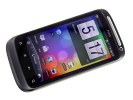
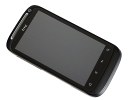
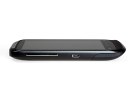
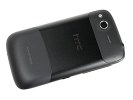
The HTC Desire S at ours
The bad news is the Desire S is – in more than one way – running against the clock. A year is a really long time in cell phone terms and there’s no guarantee the updates are enough to make it competitive in a market that’s embracing dual-core and pushing beyond the 1GHz mark.
The easiest way to dispel the doubts would be to sail smooth through this review. So why wait – unboxing coming up right after the break.
Subscribe to:
Posts (Atom)